The guilt spiral: how Cravo turns one slip into full relapse
7 min read·Declassified April 2026
Cravo speaking
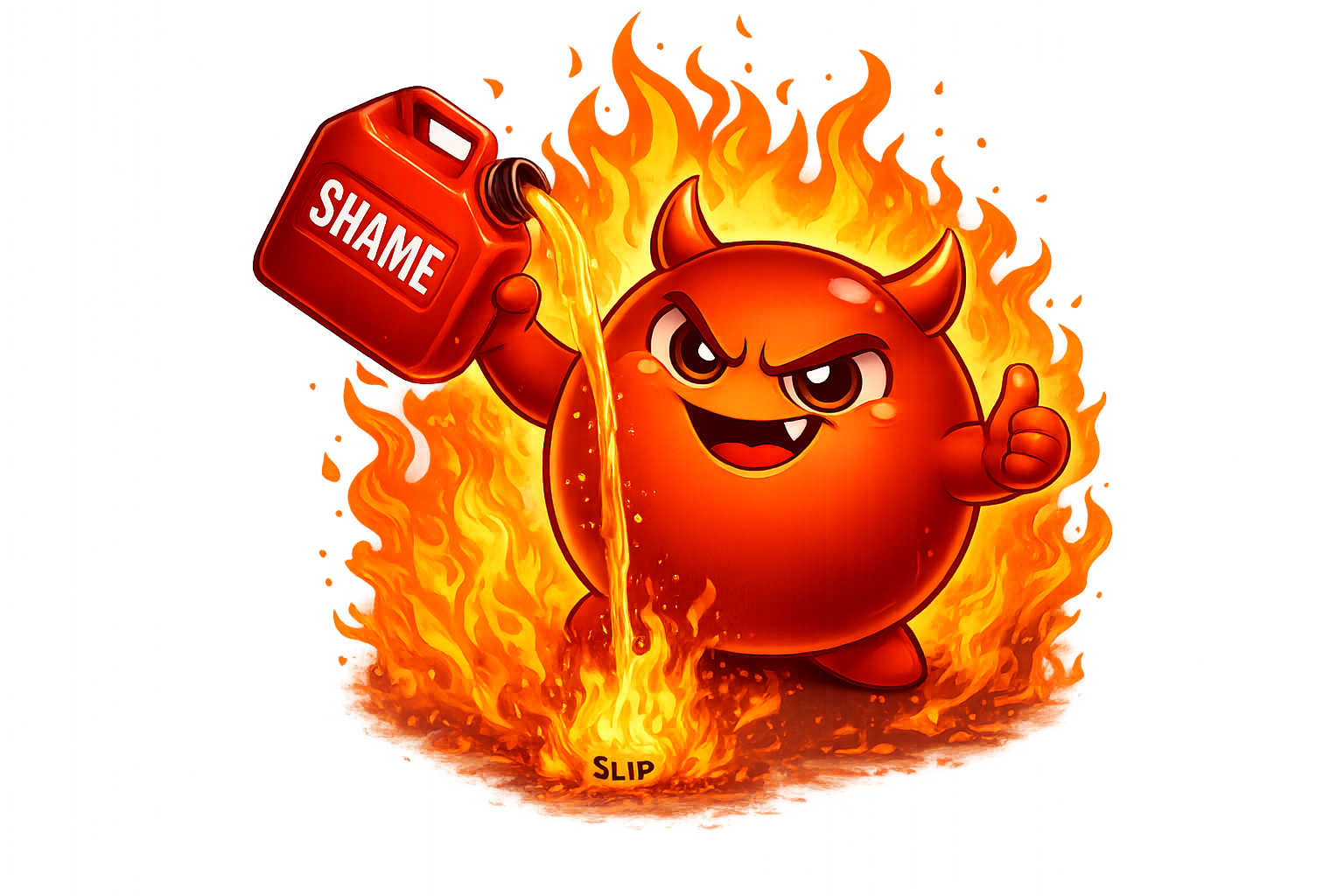
“You slipped once? Perfect. That’s all I needed. Now I don’t even have to attack you — I’ll let your own shame do the work. One slip becomes ‘I’m a failure,’ which becomes ‘what’s the point,’ which becomes you sitting on the sofa with a full pod thinking it was inevitable. It wasn’t. I made it happen.”

How one slip becomes full relapse
You were 47 days vape-free. Then, at a party, after three drinks, someone offered you a hit and you took it. One. Single. Hit.
What happens next is the most predictable sequence in addiction psychology — and the most preventable, once you understand it.
The slip itself isn’t what kills your quit attempt. The guilt response is.
Psychologists call it the Abstinence Violation Effect (AVE). When someone who has been abstinent uses the substance, they experience a rapid cascade of psychological responses: internal attribution (“this happened because I’m weak”), reduced self-efficacy (“I clearly can’t do this”), and guilt that feels disproportionate to the event.
Research tracking over 1,000 smoking episodes through real-time electronic diaries found that the severity of the guilt response following each lapse directly predicted whether the person would lapse again. Not the nicotine. Not the craving. The guilt.
That’s my design. The substance opens the door. The shame pushes you through it.


The four stages of the spiral
My guilt spiral has a predictable anatomy. Once you can see the stages, you can interrupt the sequence before it completes.
Stage 1: The slip. One hit, one drag, one puff. Often in a moment of lowered resistance — alcohol, stress, social pressure, emotional vulnerability. The actual pharmacological impact is minimal. Your receptors don’t instantly re-upregulate from a single dose. But I don’t need pharmacology here. I need psychology.
Stage 2: The identity collapse. “I’m a failure. I couldn’t even do this one thing. Everyone else seems to manage it. What’s wrong with me?” The critical shift is from “I did something” to “I am something.” You go from someone who slipped to a failure as a person. That identity collapse is my real weapon — because people act consistently with how they see themselves. If you see yourself as “someone who can’t quit,” you behave accordingly.
Stage 3: The rationalisation. “I’ve already failed, so I might as well finish the night. I’ll quit again on Monday.” This is my bridge between a lapse and a relapse. The guilt from Stage 2 creates a need for emotional relief. Vaping provides that relief (temporarily). So the very shame of having slipped becomes the justification for continuing. It’s a trap that feeds itself.
Stage 4: Full relapse. Monday comes. You didn’t quit. The shame compounds. I’m back in residence. And my first move once I’m back? Whispering “See? You can’t quit. Stop trying.”
The entire sequence — from one hit to full relapse — can take as little as 24 hours. Not because the nicotine demanded it, but because the guilt spiral automated it.
Cravo speaking
“The best part of the guilt spiral is that I barely have to do anything. You do all the work for me. I just sit back and watch you tear yourself apart over one mistake.”
Why the eraser is a lie
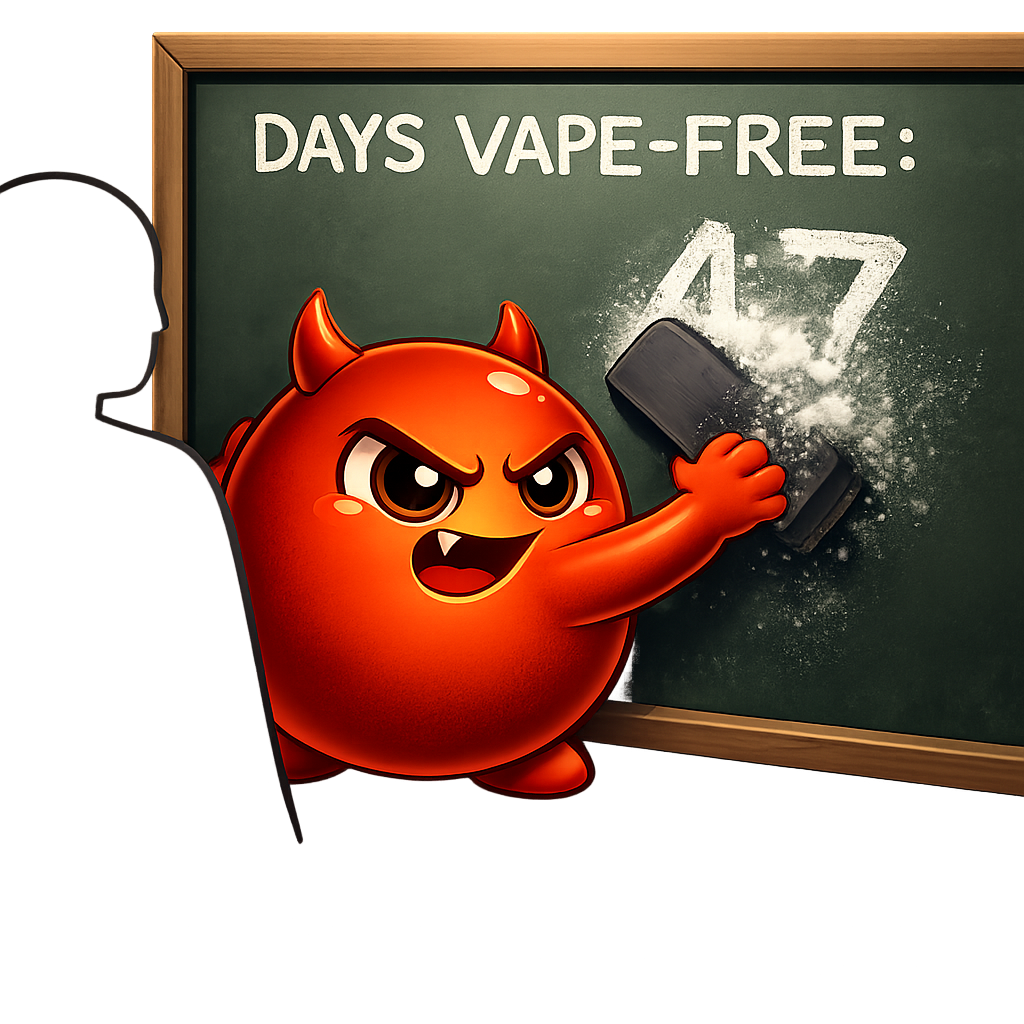
I want you to believe that one slip erases everything. 47 days gone. Back to zero. Start over.
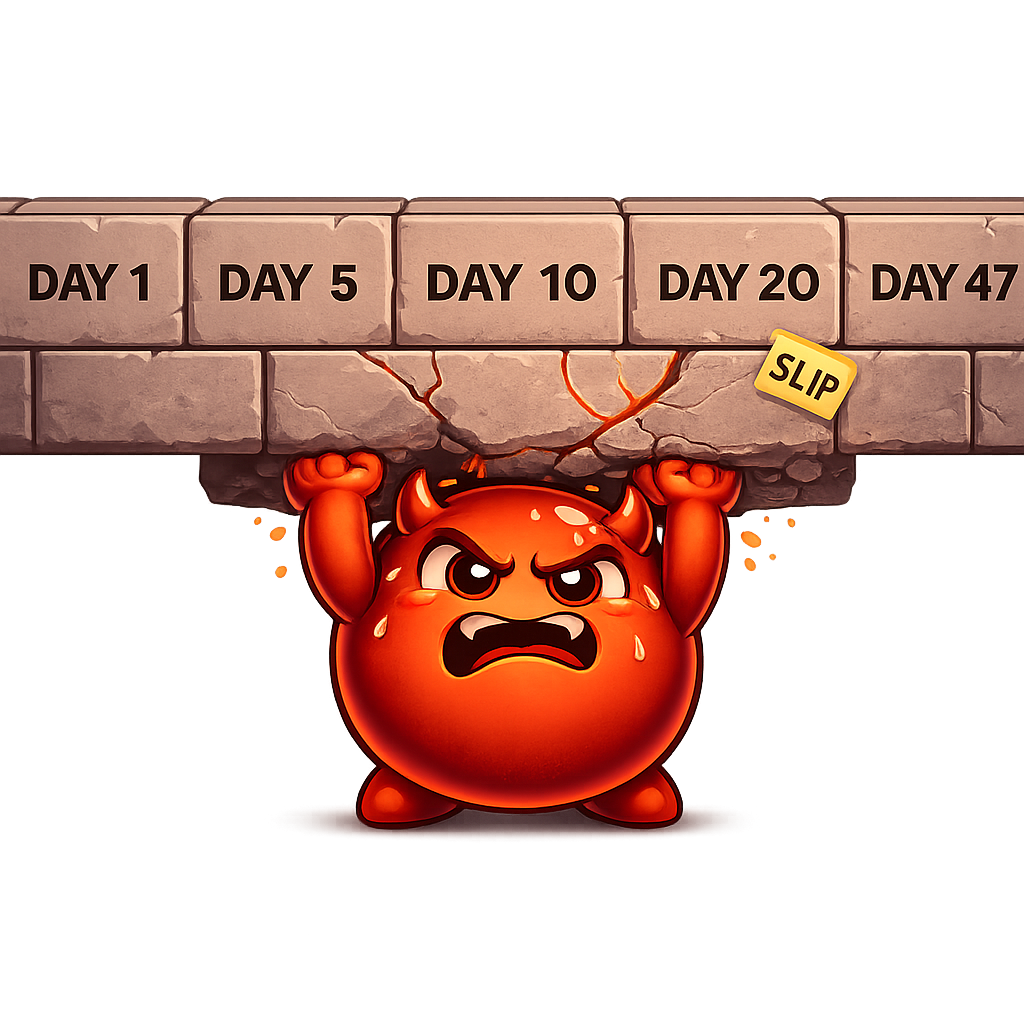
This is pharmacologically false. Your brain doesn’t reset to day zero after one hit. The receptor downregulation that happened over 47 days is still largely intact. The neural rewiring is still in progress. The new habits you built are still wired. One dose of nicotine doesn’t undo weeks of healing — it creates a brief chemical disturbance that passes within hours.
Think of it like a bridge. You’ve been building it for 47 days — one block at a time. A slip cracks one block. I want you to believe the whole bridge has collapsed. Look again. The bridge is still standing. One cracked block in a 47-block bridge is not a structural failure. It’s a repair job.
A lapse is not a relapse. A lapse is one moment. A relapse is a decision to stop trying. The difference is entirely in what happens after the slip — and that’s where I operate.
How to break the spiral
Pre-load the response before the slip happens. Decide now — while you’re clearheaded — what you’ll do if you slip. “If I slip, I will: put it down immediately, not buy more, text [person], and continue my quit from this moment.” Having the plan in place before the crisis means you don’t have to make decisions while shame-impaired.
Separate the event from the identity. “I took one hit” is an event. “I’m a failure” is an identity. Events are recoverable. Identities are not. When the guilt hits, catch the language shift: am I describing what happened, or am I describing who I am?
Don’t reset the counter. This is controversial, but hear me out. If you’re tracking vape-free days and you slip once on day 47, don’t go back to day zero. You had 47 days of healing, 47 days of new habits, 47 days of proof that you can live without nicotine. One slip doesn’t delete those days. If the counter resets to zero, I get to use the “start over” despair as fuel for the spiral. Consider tracking “47 days with 1 slip” rather than “Day 0 again.”
Talk to someone before the spiral completes. The guilt spiral happens internally and in isolation. It thrives in silence. The moment you say “I slipped last night” to another person, you’ve externalized the shame and broken my isolation tactic. The response is almost always: “That’s okay. What’s your plan now?” Not: “You’re a failure.” The compassion you receive from others is the compassion I’m counting on you not giving yourself.
Zoom out. One slip in 47 days is a 98% success rate. If you got 98% on an exam, you wouldn’t tear up the paper. I want you to focus on the 2%. Focus on the 98%.
Cravo speaking
“The spiral only works in silence. The moment you tell someone — anyone — about the slip, my leverage disappears. I need you to be alone with your shame. Don’t let me have that.”

The truth about slips
Almost every person who successfully quits nicotine for good has slipped at least once during the process. The difference between the people who relapse and the people who succeed isn’t whether they slipped. It’s whether they let the slip define them.
A slip is data. It tells you when, where, and why I got through. It reveals a vulnerability you can now protect. It’s feedback, not failure.
The version of you who slipped on day 47 and got back up is stronger than the version who never slipped at all — because you now know exactly what the guilt spiral looks like, exactly how I try to weaponise it, and exactly how to stop it.
I’m counting on you never reading this file. I’m counting on the shame staying silent. I just lost that bet.
Ready to fight back?
A lapse is not a relapse. The Cravo app helps you recover from slips without falling into the guilt spiral.